Shopping for a condo in West Town and want it to work for your dog too? You are not alone. Many buyers here want easy walks, durable finishes, and clear building rules that make life with pets simple. In this guide, you will learn which amenities matter most, what to ask an HOA, and how to spot a dog-friendly layout that holds up over time. Let’s dive in.
What “dog friendly” means in West Town
In Chicago, condo associations set their own pet policies. That can include limits on the number of pets, weight caps, breed restrictions, deposits or fees, and rules for using common areas. Policies often change, so always request the full, current pet policy in writing before you make an offer. Ask if any amendments are pending and how rules are enforced in practice.
City rules also apply once you step outside. Chicago requires dogs to be licensed and under control in public, with leashes required except in designated off-leash areas. For current guidance on animal care and control, review the City’s resources through Chicago Animal Care and Control. For off-leash areas and park rules, check the Chicago Park District’s Dog-Friendly Areas.
There are protections for assistance animals. Under the Fair Housing Act, housing providers must consider reasonable accommodation requests for service animals and emotional support animals. You can learn more from HUD’s guidance on assistance animals. Keep in mind, buildings may have a process for documentation and review.
Building amenities that matter
The right on-site amenities make daily life easier, especially in busy urban buildings.
Rooftop runs and relief areas
A dedicated dog run with durable surfacing and drainage is a high-impact feature. Rooftop runs are common in newer West Loop and West Town developments. Look for posted hours, clear cleaning schedules, and nearby waste stations so you are not tracking mess through the building.
Dog wash stations
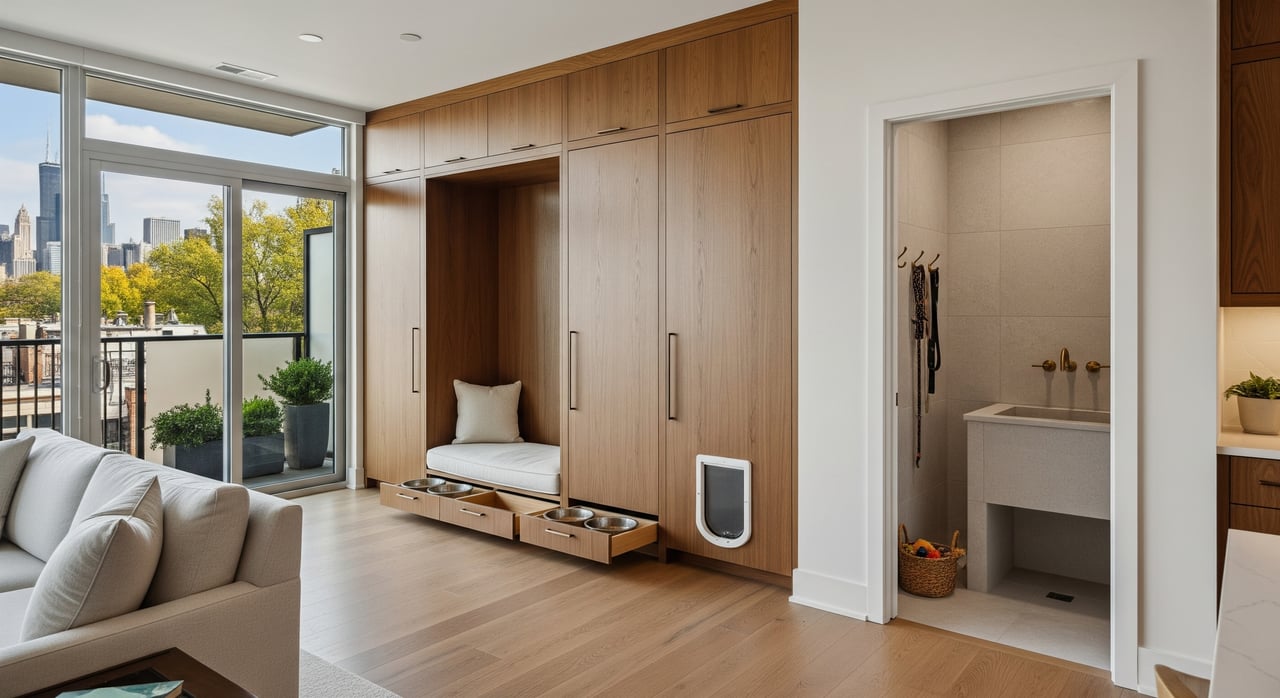
A dog wash station with a handheld sprayer and good drainage saves your bathroom and keeps hallways clean. Ask about water heater access, how often the area is cleaned, and who maintains the space.
Elevators and entry policies
In mid-rise and high-rise buildings, a service elevator or a pet policy that allows dogs to use specific elevators during peak times helps reduce conflicts and stress. Clear entry and exit routes are also helpful for quick bathroom breaks.
Waste and ventilation
Dedicated pet waste bins, bag dispensers near exits, and strong ventilation in pet-heavy amenity areas go a long way. Good air handling cuts down on odors and makes shared spaces more pleasant.
On-site services
Some buildings include ground-floor grooming, daycare, or dog walking services. Even if services are not in-house, a building with adjacent pet retailers or service providers adds daily convenience.
Unit features and finishes that hold up
The best dog-friendly condos balance durability, easy cleaning, and comfort.
Flooring that resists scratches and stains
- Luxury vinyl plank with a durable wear layer resists scratches and moisture while looking like wood.
- Porcelain or glazed ceramic tile is extremely durable. It is ideal for entries, kitchens, baths, and mudroom areas.
- Engineered hardwood with a robust, low-sheen finish can work, but expect more wear than LVP or tile in high-traffic areas.
- Avoid soft or unfinished hardwoods and high-pile carpet where your dog travels most.
Walls, trim, and surfaces
- Washable, high-scrub paint in entryways and mudrooms handles scuffs and paw marks.
- Durable baseboards and corner guards protect high-traffic routes.
- Matte or textured cabinet finishes hide wear better than glossy.
- Quartz or solid surface counters resist staining from grooming products.
Textiles that clean easily
- Performance fabrics, like Crypton or microfiber, repel stains and odors.
- Removable cushion covers make deep cleaning simple.
- Tightly woven fabrics are less likely to snag than looped weaves. Leather can show scratches but wipes clean fast.
Doors, balconies, and safety
- Check balcony rail spacing and consider plexiglass panels for small-dog safety.
- If ground-floor pet doors are allowed, confirm HOA approvals and any building requirements. These can be tough to negotiate.
Practical layout choices
- A ground-floor unit or a stack with fast stair and elevator access makes late-night outings easier.
- A tiled foyer or small mudroom is ideal for leashes, towels, and quick paw wipes.
- Look for in-unit storage to stage food, crates, carriers, and cleaning tools without blocking egress routes.
Storage and upkeep essentials
A little organization reduces daily stress and keeps your home in top shape.
- Built-in storage or a closet zone for leashes, grooming tools, food, and meds. Lockable cabinets help with pet food and medication.
- A laundry area with large-capacity machines speeds up bedding and towel cycles.
- Space to store a crate or create a built-in bed niche can be a real selling feature.
- Easy access to the trash room with clear cleaning schedules and odor control is a quality-of-life upgrade.
- A secure package room helps with same-day pet supply deliveries common in West Town.
Outdoor time near West Town
You and your dog will appreciate a mix of quick local walks and larger adventures.
- Humboldt Park offers expansive lawns and paths at the edge of West Town for scenic, on-leash walks. Verify any posted rules before visiting.
- West Town blocks include pocket parks and tree lawns for short bathroom breaks close to home.
- Designated, fenced dog-friendly areas across the city offer off-leash time. Use the Chicago Park District Dog-Friendly Areas to find the closest options and to review current rules.
- The Chicago Riverwalk and nearby river paths provide leash-on routes with more variety.
- For beach days, North Side dog beaches such as those near Montrose are within an easy drive. Always check current hours and rules before you go.
Buying smart: questions to ask before you offer
A little due diligence upfront prevents surprises later.
Get the paperwork in writing
- Request the condo association’s full pet policy, including any pending amendments and fee schedules.
- Ask for examples of recent enforcement so you understand how rules work in practice.
- Review HOA financials and insurance requirements that reference animal liability or exclusions.
Confirm operations and maintenance
- Are there designated pet areas? What are the hours and capacity limits?
- Is there a dog wash station? Who maintains it and how often is it cleaned?
- Are there limits on number of pets, weight, or breeds?
- Are there deposits, one-time fees, or monthly charges for pets? Are deposits refundable?
- What insurance does the HOA require for owners with dogs?
Inspect the unit and common areas
- Check flooring for scratches and staining, including under rugs and furniture.
- Review elevator policies for pets and note proximity to exits and stairs for quick outings.
- Confirm balcony safety and inspect rail spacing and height.
- Look for odors or repeated stains in common areas, which can suggest maintenance gaps.
- Ensure there is enough storage for crates and supplies, plus good ventilation for odor control.
Think about resale
- Pet-friendly buildings can widen your buyer pool when you sell, especially if amenities are well designed and maintained.
- Highly restrictive buildings may deter future buyers with pets. Disclose rules early to avoid deal fallout.
How to use city and park resources
Rules and amenities can change. Before you finalize a decision or plan an outing, use official sources to confirm current information:
Work with a local guide
If you want a condo that welcomes your dog and stands up to daily life, the details matter. From elevator policies and rooftop runs to flooring choices and storage, small differences can make a big impact on your routine and long-term value. If you would like help identifying the right West Town buildings, reviewing HOA documents, and weighing design tradeoffs, connect with the Dwell Wisely Group. We bring neighborhood expertise, design-savvy guidance, and a calm, organized process to your search.
FAQs
How do I confirm a condo allows my dog in West Town?
- Ask the association or manager for the current written pet policy, any pending amendments, and examples of recent approvals for dogs similar to yours.
What city rules apply when I walk my dog in West Town?
- Chicago requires dogs to be licensed and on leash in public spaces except in designated off-leash areas; review current guidance via Chicago Animal Care and Control.
What condo amenities are most valuable for dog owners?
- Rooftop or indoor dog runs, a well-maintained wash station, clear elevator policies, and convenient waste stations offer the biggest daily benefits.
Which in-unit upgrades help the most with pets?
- Durable flooring like LVP or porcelain tile, washable paint, a tiled entry or mudroom, and solid storage for food and crates make the biggest difference.
Are assistance animals treated differently from pets in condos?
- Under the Fair Housing Act, assistance animals may be allowed as a reasonable accommodation even in buildings with pet restrictions; consult HUD guidance and follow the building’s process.