What Ukrainian Village Landmark Buying Rules Mean for Buyers
Every listing in Ukrainian Village eventually shows you the same word: landmark. It sits quietly in the disclosures, in the agent remarks, sometimes just in a footnote about "exterior alterations subject to city review." Most buyers nod past it the way they nod past the radon disclosure. The question they should be asking instead is a narrower one: is this rule actually permanent, or is it something that might still get thrown out in court?
For twenty years, the honest answer was maybe. As of September 2025, it isn't anymore.
In 2006, two Chicago property owners sued the city over the Chicago Landmarks Ordinance itself, the law that creates every one of the city's local landmark districts, including the one that covers roughly three quarters of Ukrainian Village. Albert Hanna owned property in the Arlington-Deming district in Lincoln Park. Carol Mrowka owned property in the East Village Historic District, the landmarked pocket that sits inside Ukrainian Village's boundaries. Their argument was that the ordinance was too vague to be enforced fairly, that it handed too much power to an unelected Commission on Chicago Landmarks, and that singling out their neighborhoods for protection while leaving similar blocks alone violated their constitutional rights.
The case bounced through the Illinois Appellate Court four separate times over nearly two decades. A 2009 appellate ruling actually sided with the plaintiffs on the vagueness question, reversing a trial court dismissal and sending the case back for more litigation. That reversal alone was enough to make real estate attorneys across the city start fielding calls from landmark district owners wondering if their rules might disappear. They didn't. On remand, the case (eventually recaptioned Robinson v. City of Chicago after Hanna's death) worked its way back up, and on March 24, 2025, the Appellate Court upheld the ordinance in full. On September 25, 2025, the Illinois Supreme Court denied leave to appeal, closing the door for good.
That means the rule a Ukrainian Village buyer sees in a listing disclosure today isn't a policy that survived one court so far. It's a policy that survived four rounds of the state's appellate courts and a Supreme Court review, with a plaintiff who owned property in this exact neighborhood.
Here's where most buyer research goes wrong: Ukrainian Village carries two different historic designations, and only one of them actually restricts what you can do to your building.
The whole area from Division Street to Chicago Avenue, roughly Damen to Hermitage, was added to the National Register of Historic Places in 2009. That's a federal, largely honorary listing. It can open the door to certain rehabilitation tax incentives, but it doesn't put your renovation plans in front of a city commission.
Local landmark protection is a separate thing entirely, and it's the one with enforcement power. The original Ukrainian Village Landmark District was designated in 2002 and expanded twice, in 2005 and again in 2007. The adjacent East Village Historic District, the one at the center of the Hanna and Mrowka lawsuit, was designated by City Council in 2006. Together these local landmark district boundaries cover about 75 percent of the neighborhood, according to a detailed Sun-Times neighborhood guide, but not the whole thing, and not in one continuous shape. A property can sit inside the National Register area and outside the local landmark boundary, which means it can look historic on paper without actually triggering Commission review on a permit application.
The practical takeaway before you write an offer: don't ask "is this Ukrainian Village." Ask your agent or title company to confirm whether the specific parcel falls inside the local Chicago Landmark District boundary, not just the broader national historic area. That answer determines whether your renovation plans go through the Commission on Chicago Landmarks or just standard permitting.
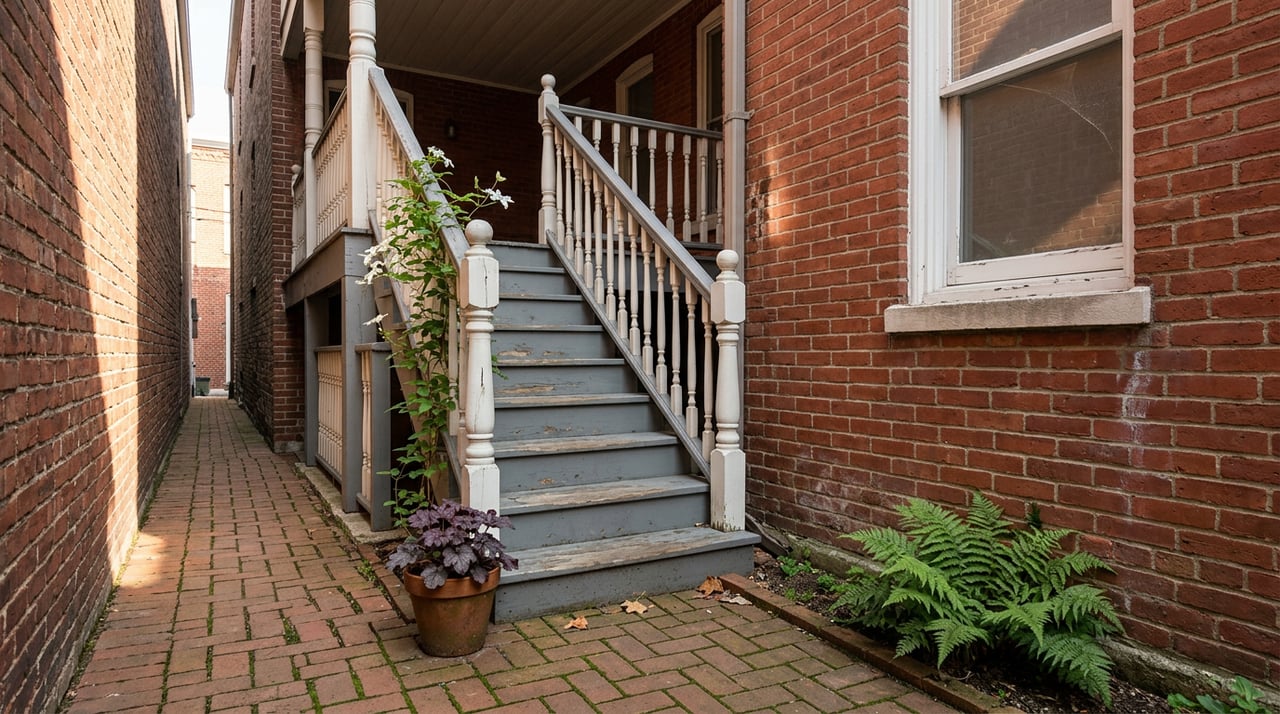
Inside the local landmark boundary, review focuses on what's visible from the public right of way. Routine maintenance and repainting don't need a permit at all. Anything that alters a street-facing feature does.
| Feature | Typical treatment under the ordinance |
|---|---|
| Windows | Must be retained and repaired first; replacements have to closely match the historic originals |
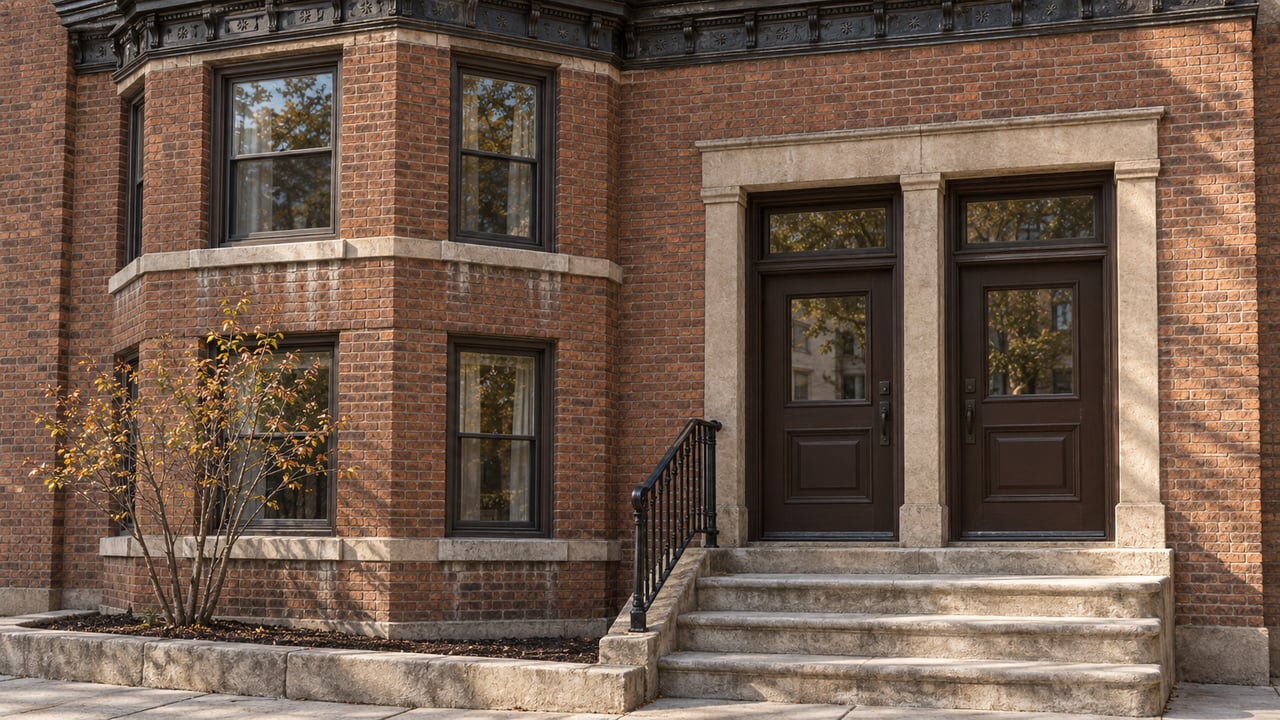
| Masonry | Painting brick is discouraged because it traps moisture and creates ongoing maintenance problems |
| Porches | Original porches should be preserved through repair, not enclosed |
| Front yards | Excavation in the front yard isn't permitted |
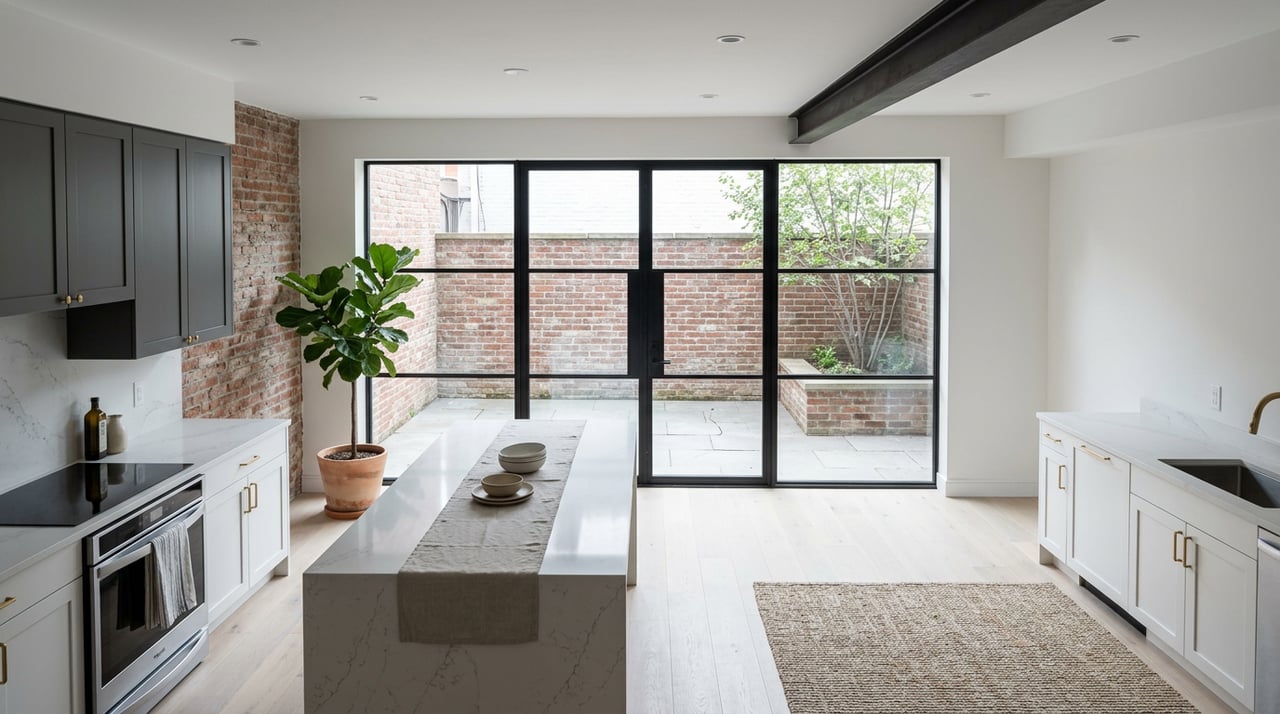
| Rear additions and alley-facing work | Reviewed with more flexibility, but still typically requires Landmarks-stamped plans |
Records reviewed by the East Village Association show how granular this gets in practice. One permit approved a full rear porch replacement only on the condition that it match the original size and location. Another, for a roof recover job, explicitly barred any change to windows, doors, or the facade as part of that same approval. A rear addition project was approved on the condition that every existing window mullion be retained and repaired rather than replaced. None of this is exotic. It's the ordinary texture of owning a building where the Commission has jurisdiction, and it applies whether the work is on the front porch or tucked in the alley.
If you're weighing an offer on a Kerfoot cottage or a greystone two-flat inside the local landmark boundary, the review process is a real cost, not a formality. Any permit application affecting a significant exterior feature gets folded into the standard city permit process, and depending on the scope of work, that can mean plans prepared by an architect or engineer before you're even in the queue. That's professional fees and lead time that a comparable, non-landmarked property in West Town or Noble Square simply doesn't carry.
Buyers planning to renovate right after closing should build that review cycle into their timeline the same way they'd budget for inspection contingencies or a mortgage rate lock. It's not a reason to avoid the neighborhood. It's a reason to ask about it before the inspection period closes rather than after the first contractor bid comes back higher than expected.
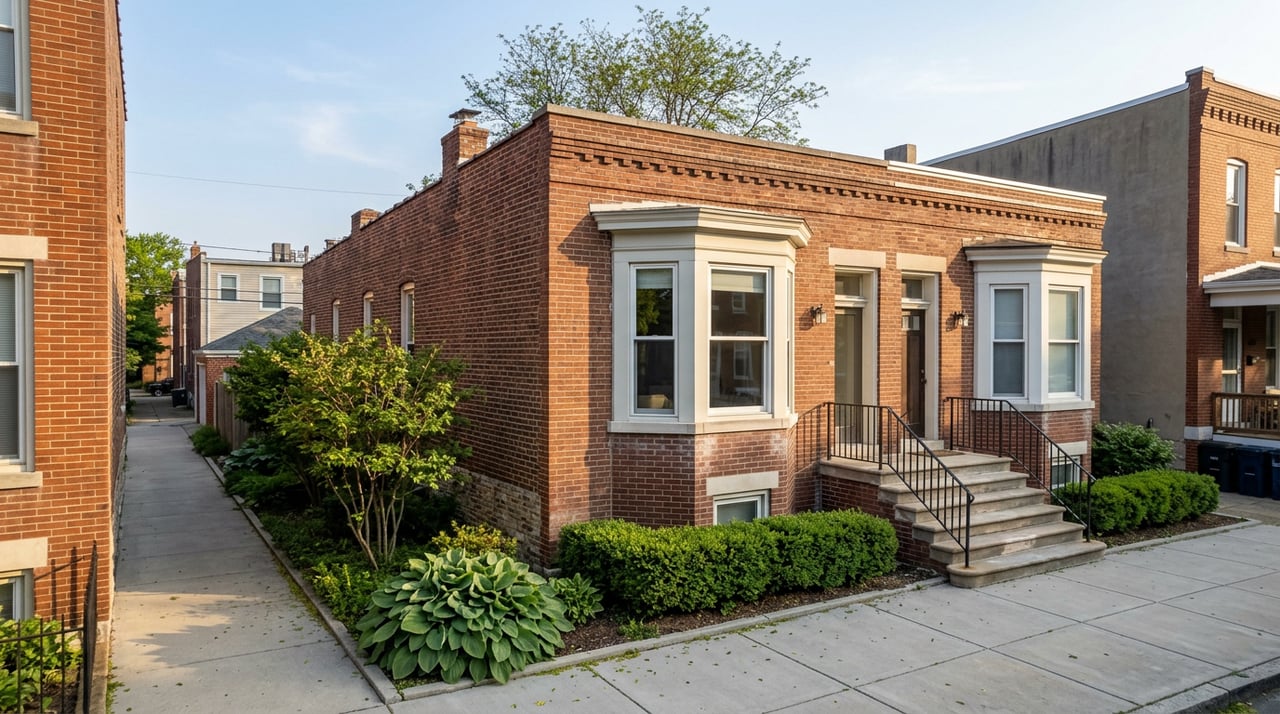
The Commission on Chicago Landmarks describes the district as "an excellent cross-section of residential building types," and that phrase is doing real work. Nearly one out of every three buildings in the district was developed by William D. Kerfoot, the real estate developer who famously reopened his office in a hastily built shack days after the Great Chicago Fire of 1871. His workers' cottages sit alongside two- and three-flats and larger apartment buildings, all now protected under the same ordinance that just survived its final legal test.
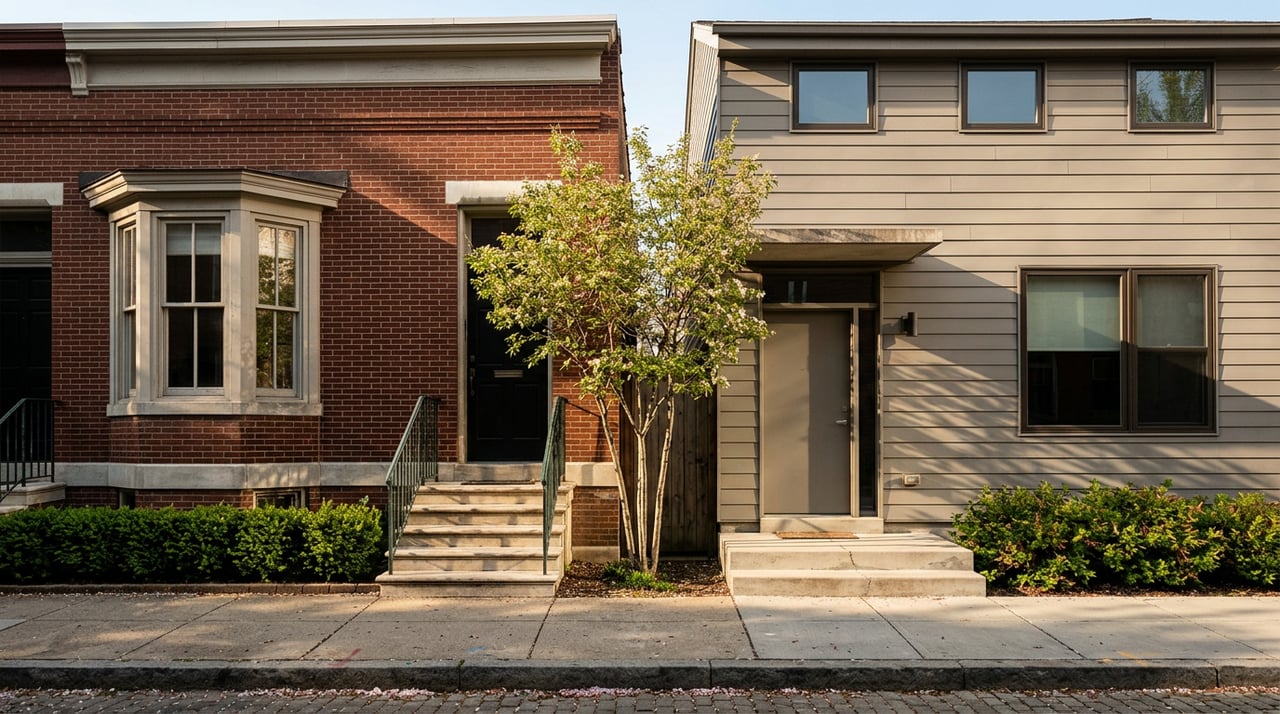
That variety matters for a buyer's expectations. A single-story worker's cottage and a larger apartment conversion don't have identical street-facing features, so the specific conditions attached to your permit will depend on what kind of building you're actually buying, not just which landmark boundary it sits inside.
Neighborhood-level price data in Ukrainian Village has swung noticeably depending on the month and the source, with one report showing a median sale price around $655,000 in October 2025, down from the prior year, and another showing $767,500 as of March 2026, up sharply year over year. Some of that volatility is just small sample size doing what small samples do in a mixed-inventory neighborhood, where a month heavy on new construction condos looks different from a month heavy on vintage cottage sales.
But the mix itself is the point. A neighborhood built from workers' cottages, three-flats, and larger apartment buildings that can't be altered beyond recognition on the street-facing side is a neighborhood whose character isn't up for a future vote. With the ordinance's constitutionality now settled for good, a buyer isn't underwriting the risk that the rules get struck down in five years. They're underwriting a fixed set of terms that have already outlasted a twenty-year legal challenge.
Does landmark status mean I can't renovate at all? No. Interior work generally has more flexibility, and routine maintenance and repainting don't require a permit. It's exterior alterations to street-facing features that go through Commission review.
Does the landmark boundary cover every address in Ukrainian Village? No. Local landmark protection covers about three quarters of the neighborhood across the Ukrainian Village and East Village designations, not the entire area, and it's a different, narrower boundary than the broader National Register listing.
Can I paint the brick on a landmarked building? City guidance discourages it, since paint on masonry traps moisture and creates a maintenance problem down the line. It's the kind of detail worth raising with your agent before you assume a cosmetic update is simple.
If you're weighing an offer inside Ukrainian Village's landmark boundary and want to know exactly what a specific property's designation status means for your renovation plans and timeline, that's a conversation worth having before you write the offer, not after. For a closer look at what design-forward updates actually look like inside these review rules, our guide to renovating Ukrainian Village flats walks through it room by room. And if you want a second set of eyes on a specific address before you commit, Dwell Wisely Group is glad to help you sort out what's fixed, what's negotiable, and what it's actually going to cost.
Whether working with buyers or sellers, Dwell Wisely Group provides outstanding professionalism into making their client’s real estate dreams a reality. Contact the Dwell Wisely Group today for a free consultation for buying, selling, renting, or investing in Chicago.
Get in touch with our team to learn more.

1875 N DAMEN AVE CHICAGO IL 60647